Friday, March 20, 2020
While the Coronavirus (COVID-19) is believed to have originated in Wuhan, China, it continues to quickly spread throughout the globe at an alarming rate. Medical experts and health officials remain baffled by the effects and contagion of this novel virus. However, as a result of this fast-spreading virus, on March 11, 2020, the World Health Organization (WHO) named COVID-19 a pandemic, a powerful term leading to significant repercussions on both precious healthcare resources and the global economy, alike.

Wednesday, September 25, 2019
Threat of a Cascadia Megathrust Fault Earthquake in Northwest
 |
| Earth quake lines Photo by Andrew Buchanan on Unsplash |
With three decades of experience in the field of disaster response, Steve Slepcevic has assisted clients in preparing and recovering from storms, floods, fires, and earthquakes. Emphasizing proper preparedness, Steve Slepcevic has an extensive knowledge of risks associated with the various types of natural disasters.
One major disaster waiting to occur is in the Pacific Northwest, which is not known for frequent earthquakes but sits on the 600-mile-long Cascadia megathrust fault. Stretching from Northern California to Canada’s Vancouver Island, the fault traverses urban areas such as Portland and Seattle.
The Cascadia subduction zone is one that involves the small oceanic Juan de Fuca tectonic plate being driven underneath the much larger North American plate. Such subduction systems can trigger the largest types of earthquakes, with the 2011 Tohoku earthquake in Japan a prime example.
While the Cascadia is much less active than the San Andreas Fault to the south, when an earthquake does hit it will be enormous. The severity will be due to a phenomenon called plate locking, which occurs when stress builds as two plates are stuck together and cannot move past each other.
Geological records reveal that the last such earthquake along the Cascadia fault in 1700 was a magnitude 9.0 temblor, which represents a strength 30 times greater that of the largest predicted quake involving the San Andreas fault. There is currently a window of from 300 to 500 years within which another major Cascadia earthquake is likely to occur.
Accurately predicting the next Cascadia quake is currently impossible. A massive increase in active monitoring stations offshore and onshore will be needed to get a clearer picture of when the event might occur.
One major disaster waiting to occur is in the Pacific Northwest, which is not known for frequent earthquakes but sits on the 600-mile-long Cascadia megathrust fault. Stretching from Northern California to Canada’s Vancouver Island, the fault traverses urban areas such as Portland and Seattle.
The Cascadia subduction zone is one that involves the small oceanic Juan de Fuca tectonic plate being driven underneath the much larger North American plate. Such subduction systems can trigger the largest types of earthquakes, with the 2011 Tohoku earthquake in Japan a prime example.
While the Cascadia is much less active than the San Andreas Fault to the south, when an earthquake does hit it will be enormous. The severity will be due to a phenomenon called plate locking, which occurs when stress builds as two plates are stuck together and cannot move past each other.
Geological records reveal that the last such earthquake along the Cascadia fault in 1700 was a magnitude 9.0 temblor, which represents a strength 30 times greater that of the largest predicted quake involving the San Andreas fault. There is currently a window of from 300 to 500 years within which another major Cascadia earthquake is likely to occur.
Accurately predicting the next Cascadia quake is currently impossible. A massive increase in active monitoring stations offshore and onshore will be needed to get a clearer picture of when the event might occur.
Tuesday, June 25, 2019
Master of Disasters
Master of Disasters
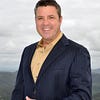
When Steve Slepcevic was 5 years old, his father asked him what he wanted to be when he grew up.
Young Slepcevic said he did not know. But his father did.
“He said, `You’re going to be a doctor. So tell people to call you Dr. Steve,”‘ Slepcevic, more than three decades later, recalled his father saying. “So people started calling me Dr. Steve.”
But Slepcevic eventually dropped the nickname. The son of strict Serbian immigrant parents never made it to medical school.
Instead, he dropped out of Hawthorne High School in the 11th grade to pursue a career in construction.
“I was probably 15 or 16 when I made my mind up that I loved framing and building and being in the outdoors,” Slepcevic said. “And I don’t think he was disappointed because he saw that I was good at it.”
Today, Slepcevic, 50, owns Paramount Disaster Recovery, a Rolling Hills Estates construction company that specializes in rebuilding businesses and homes hit by disaster.
He also organizes conferences to teach businesses and institutions how to deal with natural and man-made disasters.
Slepcevic organized conferences in 12 cities nationwide last year and expects another dozen this year. Attendance ranged from about 150 to 200 at each event, with representatives from businesses, government agencies, hospitals, universities and other institutions attending.
Speakers discuss such topics as data recovery, evacuation plans, stabilizing a building and dealing with insurance companies.
“I found that the businesses that had their plans in place, they had a better chance of recovering than those that didn’t,” he said. “So I set up a second company that has an educational conference called the Disaster Preparedness Summit. Those who respond quickly and effectively save a ton of money and reopen quicker.”
Slepcevic’s first experience with a hurricane came in 1992, when he went to Florida for a project after Hurricane Andrew. He rebuilt a retirement home owned by the parents of a friend.
“It was my first taste of wide-area disaster recovery,” Slepcevic said. “I had done fires and floods in California but on an individual basis. After Florida, I started to realize I wanted to do more wide-area disaster recovery.”
He went on to do work in the aftermath of other hurricanes and disasters, including the 1994 Northridge earthquake and Hurricane Katrina in 2005 on the Gulf Coast.
Slepcevic said he did about $18 million in renovation work from the Northridge quake and $8 million to $9 million from a massive 1995 Texas hail storm.
The Southern California wildfires have kept him “really busy,” he said.
But he has also lost money on some projects.
“I worked Katrina, and we had an office set up in Slidell, La. We made money, but we also lost money because we had some clients who didn’t pay,” he said. “I’m still collecting.”
Slepcevic was born in Akron, Ohio, the middle child between four sisters. The family moved to California a year later.
At 12 years old, he began to help out after school and on weekends with his uncles, who were general contractors.
“At 12 years old, digging ditches and pouring concrete was the norm,” he said.
By the time he was in high school, Slepcevic often worked until 9 or 10 at night.
“At that time, I recognized he had a gift for it,” said his uncle Batta Vujicic who now owns Prime Development in Westlake Village. “And he loved the field. He made a passionate jump into it. And I thought that was going to hold him on for years to come.”
Slepcevic took his first solo project at age 17. His friend’s parents in Hawaii wanted to build a two-car garage.
In about eight days, Slepcevic, with the help of his friend, built the garage.
“There was no money to be made. They gave me room and board and the flight (ticket),” Slepcevic said. “My whole thing is I wanted to get done and get out there and surf.”
Slepcevic then started his own business and bid on his uncles’ jobs while taking engineering and design classes at El Camino College.
“I was doing framing, windows, cabinets, doors,” he recalled.
By 1989, he had acquired his own business license and named his Hawthorne firm Paramount Construction.
He built homes and shopping centers. He eventually began to complete unfinished construction projects that were abandoned by the owner after a foreclosure.
He also started to work on homes that were damaged by fire or flood.
Slepcevic relocated his business to Rolling Hills Estates in 1999.
In 2002, as his disaster work grew, he began Paramount Disaster Recovery.
He says the disaster work is more satisfying.
“I realized, even going to Katrina and seeing people’s faces of confusion and not knowing what they were going to do, these people needed someone to lead them out of their situation,” Slepcevic said.
Name: Steve Slepcevic
Age: 50
City of residence: Hollywood Riviera section of Torrance
Title: Owner of Paramount Disaster Recovery in Rolling Hills Estates
Education: Dropped out of school in junior year; took some architecture and structural engineering classes at El Camino College.
Family: Wife Tracy; daughters Victoria, 22, and Kaitlyn, 18; and son Noah, 13.
Hobbies: Oil painting, surfing, dancing, storm chasing, drones, traveling.
INSURANCE COMPANIES USE PUBLIC MEDIA TO DEFACE DISASTER RECOVERY AGENCIES.
PALOS VERDES, CA — In this tough economy everyone is watching their spending, trying to make that buck stretch just a little further, and insurance companies are no different. If you have ever had to make a claim, you may already be aware of the problems associated with getting what is fair. The people effected in some of the recent disasters, Hurricane Katrina and Rita and the California wildfires, know all too well what it is like to not receive a fair claim payment from their insurance companies, you’re better off believing a poker player than a insurance claims adjuster. It’s never a bad idea to hire a water and fire damage restoration company to complete an independent assessment and cost estimate. Hopefully, you won’t need it, but if legal action becomes necessary, it’s a handy document to have in your corner. So when people like Steve Slepcevic and his team of experts arrive on the scene to try to make a difference, sometimes the insurance companies fight back with lawsuits and media slander. Steve Slepcevic has focused his construction business on restoring and reconstructing homes and businesses directly and exclusively for the property owners after natural disasters.
For those that don’t know him, Steve Slepcevic has more than 25 year’s experience in the disaster reconstruction industry that can be first traced back to his younger years when he worked for uncles that were in the industry, everything from cabinetmakers to large-scale developers.
Since 1989 Steve Slepcevic has completed several thousand projects with the goal of getting their clients fully restored and rebuilt through the client’s insurance companies. As for his passion in helping natural disaster victims Slepcevic says, “At a young age I was always troubled watching the floods and fires on TV and seeing peoples lives and homes destroyed, my thought always went to who is going to help these people rebuild their homes, businesses and restore their lives”.
Insurance companies are in a business of collecting premiums, not paying claims, and to do so they tend to undercut their policyholders claims. Thousands of complaints with state insurance departments and civil court cases show that insurance companies often pay 30–60 percent of the cost of rebuilding a damaged home. Paying less to victims of natural disasters has helped produce record profits. Even after the worst natural disaster in U.S. history, Hurricane Katrina, insurance companies reported their highest ever profit of $73 billion.
“Money managers have taken over this whole industry. Their eyes are not on people who are hurt but on the bottom line for the next quarter” says Robert Hunter insurance director at the Washington-based Consumer Federation of America, who was Texas insurance commissioner from 1993 to 1995.
In order to keep stockholders happy by continuing to make those record breaking profits insurance companies implement numerous delay tactics, from transferring claims to several adjusters to try to lower claim amounts, to using a list of “preferred” engineers, consultants, and industrial hygienists who will not perform proper testing on contaminated areas. In the end the insurance company’s adjuster has the leverage to deny or lowball the claim value.
As hard as it is for victims of natural disasters to work with the insurance companies it is even harder for those people, such as Slepcevic, that are trying to help victims outside of the insurance companies influence. It hasn’t been an easy road for Slepcevic and his team of experts, but their passion to help out homeowners that are trying to rebuild their lives after a natural disaster outweighs any shady tactics the insurance companies try to use to discredit them.
“I know it may be a rough road working through the trenches hand in hand with my clients, but this is why I got in the business as a small boy sitting in his living room watching the people suffered in the disaster devastated areas and thinking I’m going to grow up and help these people rebuild their lives, I had no idea that it would be a huge price to pay in the form of slander and lies” says Slepcevic, “the insurance carriers spend a lot of money in an attempt to keep me from teaching people what they need to do to avoid being victimized by unscrupulous contractors and insurance adjusters. Sometimes when you have something really important for people to know that somebody, somewhere in power doesn’t want them to know, you’re going to eventually pay a price for it.”
Steve Slepcevic and his team of certified and licensed contractors are just one of many groups out there trying to make a difference. Every time there is a win for their clients whether through one of the law cases, complete reconstruction, such that the client receives the full value of the claim, the insurance companies just fight back harder with lawsuits, fraud complaints, slanderous articles and posts.
Unfortunately not all disaster recovery agencies are as forthcoming and upfront as Steve Slepcevic. Like any industry when there is an opportunity to exploit people to make money there are some bad apples that take advantage of people in need, usually ruining the reputation for the actual good ones out there.
Slepcevic says his final piece of advice if all else fails is to contact a lawyer, “We recommend one of the large law firms such as Myers, Widders, Gibson, Jones and Snyder, Girardi and Keese, Kabateck Brown Kellner, Stone, Rosenblatt & Cha, Thornhill Law Partners, Steven Zelig or others that take bad faith actions on for the consumer”.
Steve Slepcevic’s founded Paramount Disaster Recovery has been helping individual homeowners, business owners, and homeowner associations (HOA) with their roof repair needs, including roof consultants, insurance claim consultants, and roofing contractors. Steve Slepcevic is a proud member of the Building Owners & Managers Association International, the Community Associations Institute, and the National Institute of Disaster Restoration.
More info Visit:-http://www.spoke.com/profiles/SteveSlepcevic and http://california.realestaterama.com/2011/01/27/steve-slepcevic-disaster-recovery-plans-help-to-minimize-the-disasters-impact-ID0931.html
Company :-Paramount Disaster Recovery Inc.
Subscribe to:
Posts (Atom)